

The Great Journey of Life: A Father’s Message to His Son
Inspired by the life and reflections of Tiziano Terzani
When Travel Becomes a Journey Within
What if the greatest journey of our lives were not measured in miles, countries visited, or adventures experienced, but in the wisdom we gain along the way?
For some people, travel is about discovering new destinations, exploring unfamiliar cultures, and collecting unforgettable memories. For others, it gradually becomes something deeper: a way to understand humanity, question personal beliefs, and discover what truly matters.
The life and reflections of Italian journalist and writer Tiziano Terzani (1938–2004) offer a remarkable perspective on this deeper meaning of travel. After decades spent reporting from some of Asia’s most turbulent regions, Terzani turned his attention toward a different kind of exploration: the journey into oneself.
His story reminds us that sometimes we must step away from the noise of the world to understand our place within it.
Tiziano Terzani: A Life Beyond Ordinary Boundaries
Tiziano Terzani was an Italian journalist, author, and foreign correspondent whose career took him across Asia during some of the most dramatic moments of the twentieth century.
Working for publications including the German magazine Der Spiegel and the Italian newspaper Corriere della Sera, he witnessed extraordinary historical events. His experiences included the fall of Saigon in 1975, the violence of the Khmer Rouge regime in Cambodia, and the political transformations of China under Mao Zedong.
These experiences exposed him to the complexity of human nature. He observed courage, generosity, suffering, political ambition, and the devastating consequences of ideological conflict.
Unlike travelers who pass through a country simply to admire its monuments or landscapes, Terzani sought to understand the people who lived there. He wanted to explore the forces shaping their societies, their traditions, and their hopes for the future.
Asia became much more than a professional destination. It was a place where he encountered different philosophies, spiritual traditions, and ways of understanding existence.
Over time, these encounters encouraged him to question not only the world he was reporting on, but also the assumptions that guided his own life.
From International Reporter to Spiritual Explorer
A successful journalism career can bring recognition, professional satisfaction, and access to extraordinary places. Yet even a life filled with travel and achievement can leave important questions unanswered.
What is the purpose of all this movement? Does visiting more countries necessarily make us wiser? Can professional success provide lasting peace of mind?
During the 1990s, Terzani increasingly turned toward reflection and spiritual exploration. His interest in India and Asian philosophies encouraged him to examine the relationship between the individual, society, nature, and the passage of time.
Rather than continuing to measure his life through professional accomplishments, he began looking for a quieter understanding of existence.
His retreat from the demands of journalism was not simply an escape from the world. It represented an attempt to observe life from another perspective, away from deadlines, political events, and the constant pressure to remain informed.
For travelers, this change of direction offers an important lesson. Sometimes the most meaningful experiences happen when we stop trying to see everything and allow ourselves to experience a place more deeply.
A quiet morning in the mountains, a conversation with a stranger, or a few moments of solitude can sometimes leave a stronger impression than an entire itinerary packed with famous attractions.
Explore the World Through Tiziano Terzani’s Books
Discover extraordinary journeys, Asian wisdom and a remarkable conversation between father and son.

A Fortune-Teller Told Me
Follow Terzani’s fascinating travels across the Far East, filled with unexpected encounters, local traditions and cultural discoveries.
View on Amazon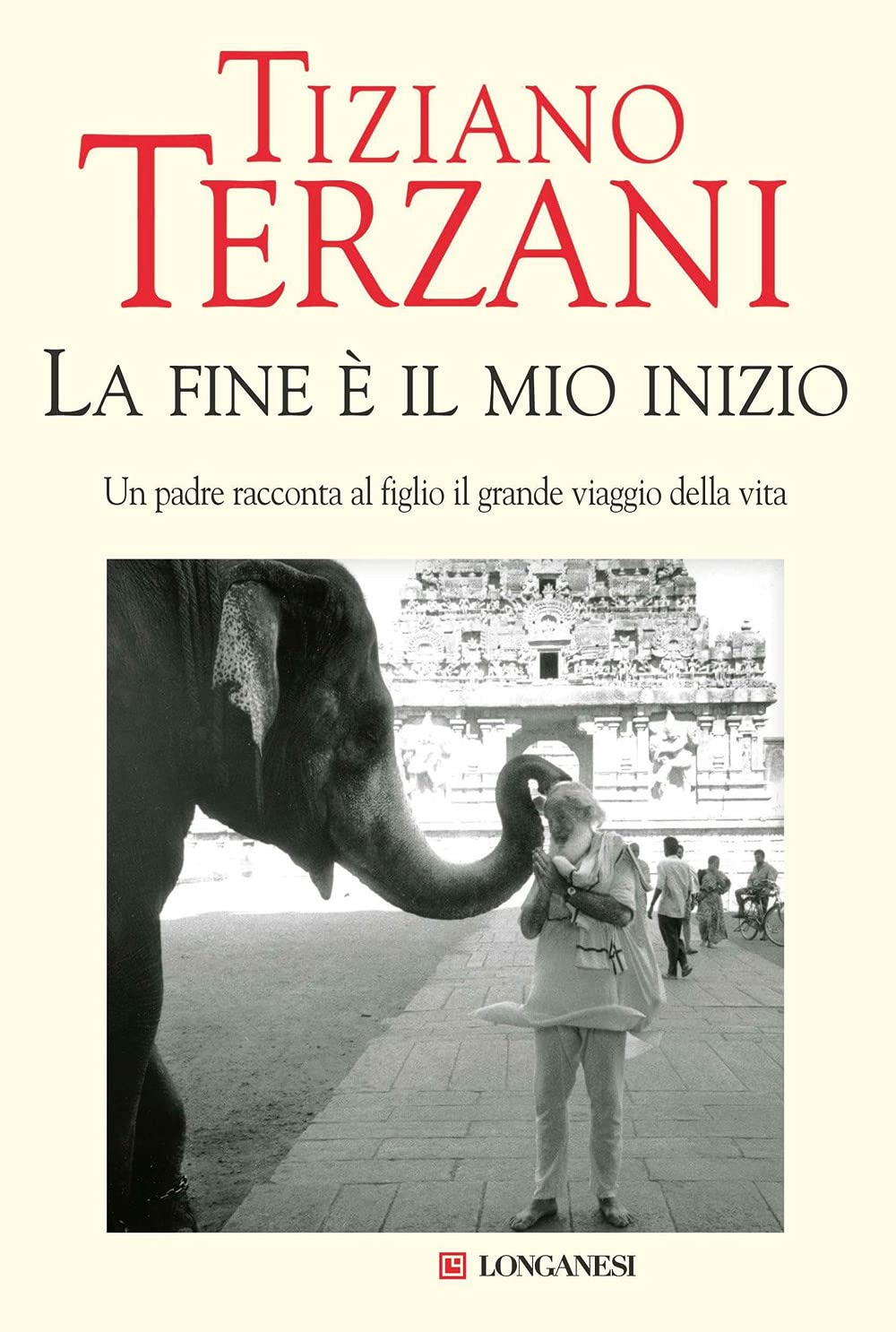
La fine è il mio inizio
A deeply personal father-and-son conversation about life, death, experience and the wisdom gathered along the way.
View on AmazonAs an Amazon Associate, I earn from qualifying purchases.
The Great Journey of Life: A Father Speaks to His Son
At the heart of The Great Journey of Life: A Father’s Message to His Son lies an intimate and universal theme: the desire to share what life has taught us with the people we love.
In the account presented by the book, Terzani withdraws to a remote cabin after an intense career as an international correspondent. Facing his own mortality, he reflects on the extraordinary experiences that have shaped him.
He invites his son to join him, creating an opportunity for a conversation that goes beyond ordinary family exchanges.
Rather than offering a conventional list of instructions, the father shares the insights that have emerged from his experiences. His reflections concern the meaning of happiness, the importance of inner freedom, the limitations of material success, and the need to recognize what deserves our attention.
The relationship between father and son gives these questions a deeply personal dimension. Their dialogue becomes an opportunity to pass on something more valuable than possessions or professional achievements: a way of looking at the world.
Although each generation must discover its own answers, the wisdom of those who came before can provide guidance, perspective, and reassurance.
Ultimately, this is a story about the human desire to leave something meaningful behind. Not necessarily a monument, a fortune, or a famous name, but a legacy of understanding, compassion, and humanity.
Learning to Appreciate What Truly Matters
Modern life encourages constant movement. We work toward the next promotion, plan the next holiday, purchase new possessions, and search for experiences that promise to make us happier.
Yet the pursuit of more can sometimes prevent us from appreciating what we already have.
Terzani’s reflections invite readers to reconsider this habit. Perhaps a fulfilling life is not defined by the number of achievements accumulated, but by the quality of our relationships, the attention we give to the present, and our ability to remain curious about the world.
This does not mean abandoning ambition or refusing new experiences. Instead, it means asking whether our choices reflect our genuine values.
Travel can help us make this distinction. Experiencing different cultures reveals that happiness does not look the same everywhere. People organize their lives according to different priorities, traditions, and understandings of success.
These encounters can challenge our assumptions and encourage us to live with greater openness.
Sometimes, the greatest souvenir from a journey is not something we bring home in our luggage. It is a new perspective that quietly changes the way we see our everyday lives.
Solitude, Nature, and the Art of Slowing Down
One of the most powerful ideas associated with Terzani’s later reflections is the value of stepping back from the demands of ordinary life.
Solitude can create the space needed to examine our thoughts without the constant influence of other people’s expectations. Time spent in nature can also restore our sense of proportion, reminding us that human concerns exist within a much larger world.
A remote cabin, a mountain trail, a quiet forest, or an empty beach can become places for reflection. Their value does not necessarily depend on luxury or distance. What matters is the opportunity to slow down and pay attention.
For anyone planning a meaningful trip, this suggests an alternative to conventional tourism. Instead of filling every day with activities, leave room for unplanned discoveries.
Walk without constantly checking your phone. Observe the rhythm of a local market. Listen carefully when someone shares a story about their community. Allow a destination to reveal itself gradually.
These simple practices can transform travel from a checklist of attractions into a genuine encounter with the world.
Books for a More Meaningful Journey
Continue exploring the philosophy of travel, everyday wisdom and the art of living well.
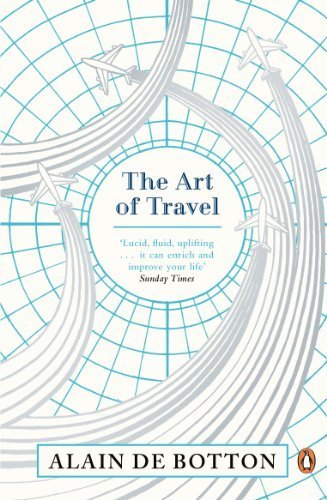
The Art of Travel
Alain de Botton reflects on why we travel and how anticipation, observation and curiosity can transform a journey.
View on Amazon
The Daily Stoic — 10th Anniversary Edition
Explore 366 daily meditations on wisdom, perseverance and the art of living, designed to inspire reflection and greater clarity.
View on AmazonAs an Amazon Associate, I earn from qualifying purchases.
Facing Mortality and Discovering Freedom
The awareness of mortality often changes the way people evaluate their lives. When time is recognized as finite, certain priorities become clearer while others lose their importance.
Terzani’s reflections on death are therefore closely connected to his search for freedom. Understanding that life cannot continue indefinitely may encourage us to spend less energy pursuing external approval and more time cultivating meaningful relationships and experiences.
This perspective does not require pessimism. On the contrary, recognizing the limits of life can deepen our appreciation of its ordinary moments: a shared meal, a familiar voice, a beautiful landscape, or the simple pleasure of being present.
It can also inspire us to reconsider how we use our time. Are we living according to our own convictions, or merely following expectations established by others?
These questions have no universal answers, but they are worth asking at every stage of life.
A Legacy That Transcends Generations
Tiziano Terzani died in 2004, but his work continues to interest readers seeking to understand Asia, spirituality, and the deeper meaning of human experience.
His life brought together two apparently different worlds: the restless curiosity of a journalist and the contemplative perspective of a spiritual seeker.
That combination makes his story particularly relevant to modern travelers. Exploring the world can broaden our understanding, but the value of travel ultimately depends on what we learn from those experiences.
The most memorable journeys often change the traveler as much as they reveal the destination.
A country may introduce us to a different way of life. A conversation may challenge a belief we have held for years. A period of solitude may help us recognize what we have been overlooking.
And sometimes, returning home with a different perspective is more important than arriving somewhere new.
Why This Story Matters to Every Traveler
The Great Journey of Life: A Father’s Message to His Son encourages us to look beyond the usual definitions of adventure and discovery.
It reminds us that travel can be an education in empathy, humility, and self-understanding. The places we visit matter, but so do the questions we carry with us and the people we encounter along the way.
For anyone who loves exploring the world, Terzani’s story offers an invitation to travel more consciously. Seek experiences that challenge your assumptions. Learn from local traditions. Make time for reflection. Appreciate the people who accompany you, and remember that no itinerary can predict every meaningful moment.
Above all, recognize that the journey does not end when the plane lands or the suitcase is unpacked.
The lessons we discover abroad can continue to influence our choices for years afterward.
The great journey of life is not simply about how far we travel, but about how deeply we learn to live.
And perhaps the most precious legacy we can leave to the next generation is not a map showing everywhere we have been, but the wisdom to discover what makes their own journey worthwhile.
Editorial note: This article explores themes associated with Tiziano Terzani’s life and the book description provided. It is an original adaptation, not a verbatim translation or a collection of direct quotations from the book.